

Demand for biofuelFuel made from organic feedstock, such as renewable diesel, biodiesel, sustainable aviation fuel, renewable natural gas, and ethanol. is rising fast.Demand for feedstockThe raw material a plant runs on, such as wood residues, manure, biosolids, or crushed rock. evidence is rising even faster.
- Transportation
- Heating
- Energy Generation
- Aviation
- Others
| Year | Transportation | Heating | Energy Generation | Aviation | Others | Total (USD billion) |
|---|---|---|---|---|---|---|
| 2020 | 18.3 | 4.6 | 1.5 | 0.9 | 1.8 | 27.1 |
| 2021 | 19.8 | 4.8 | 1.7 | 0.7 | 2.2 | 29.2 |
| 2022 | 22.0 | 4.8 | 2.0 | 0.9 | 2.2 | 31.9 |
| 2023 | 23.9 | 5.7 | 2.2 | 0.7 | 2.2 | 34.6 |
| 2024 | 26.0 | 6.6 | 2.0 | 1.1 | 2.6 | 38.3 |
| 2025 | 28.9 | 7.1 | 2.6 | 0.9 | 2.6 | 42.1 |
| 2026 | 32.2 | 7.7 | 2.4 | 1.1 | 3.1 | 46.5 |
| 2027 | 35.6 | 8.4 | 3.5 | 0.9 | 3.7 | 52.1 |
| 2028 | 40.4 | 9.3 | 3.7 | 1.1 | 4.0 | 58.4 |
| 2029 | 45.7 | 10.6 | 4.2 | 1.1 | 4.2 | 65.7 |
| 2030 | 51.8 | 12.1 | 4.6 | 1.5 | 4.2 | 74.2 |
Biofuels made from wastes and residuesMaterial left over from making something else, such as sawdust, bark, or crop stalks. can earn more credits than biofuels made from virgin or diverted materials.
Biofuel producers need two things from a waste or residue feedstock: proof that it qualifies and a reliable way to get it.
Both are hard.
Mandates, tax credits and purchase agreements keep raising demand for biofuel, and production capacity has risen sharply in response. Those policies also reward low carbon intensityThe greenhouse gas emissions behind a fuel over its life cycle, per unit of energy., and residues and wastes score lowest. So each new biofuel plant competes for the same limited supply of residue and waste feedstock. For feedstock suppliers, that means more buyers, longer contracts and stronger pricing, as long as the supplier can prove the feedstock is a genuine residue or waste.
- The U.S. Renewable Fuel StandardThe U.S. EPA program that requires renewable fuel to be blended into the fuel supply each year. set record volumes for 2026 and 2027, including about 9 billion RINsRenewable Identification Number: the credit the U.S. Renewable Fuel Standard uses to track each gallon of renewable fuel. Biomass-based diesel earns more than one RIN per gallon. of biomass-based diesel each year, or roughly 5.5 to 6 billion gallons.
- The U.S. 45ZThe U.S. clean fuel production tax credit. Its value rises as a fuel’s carbon intensity falls. credit now runs through 2029 and only pays on feedstock produced or grown in the U.S., Canada or Mexico, steering biofuel producers toward North American feedstock.
- California’s Low Carbon Fuel StandardA state or provincial program, such as California’s or British Columbia’s, that rewards fuels for lowering carbon intensity below a yearly benchmark. requires a 30% cut in fuel carbon intensity by 2030. Starting in 2028, a company can earn credits on biomass-based diesel made from soybean, canola, and sunflower oil only up to 20% of its total biomass-based diesel volume, which pushes biofuel producers toward residues and wastes.
- Canada’s Clean Fuel RegulationsCanada’s federal program for lowering the carbon intensity of fuels. raise the required carbon intensity reduction every year, from 3.5 gCO2e/MJ in 2023 to 14 gCO2e/MJ in 2030, four times the starting level.
- Airlines and corporate buyers are signing multi-year sustainable aviation fuelJet fuel made from renewable feedstock, such as used cooking oil, fats, or wood residues. deals. In 2026, American Airlines and Google agreed to 35 million gallons of fuel made from wastes, including used cooking oil.
Sources: EPA, Final Renewable Fuel Standards for 2026 and 2027 · farmdoc daily, RFS gallon conversion (2026) · 26 U.S.C. §45Z (Cornell LII) · CARB, LCFS Final Regulation Order (2024 amendments) · ECCC, Clean Fuel Regulations · American Airlines, SAF agreement with Google (2026)
Biofuel buyers pay for wastes and residues because fuel made from them earns more government credits than fuel made from purpose-grown energy crops. That advantage holds only when evidence proves the feedstock is a genuine waste or residue. Material that can’t be traced to its source, or that was deliberately made into waste, earns the same credits as energy crops. This is why every biofuel producer asks for data, sampling plans and site visits. Every new producer asks again, and each one walks away with your sensitive source lists and volumes, with no promise to buy. A FEED designationFEED’s finding that a stream’s evidence and analysis meet the published FEED standard. proves your feedstock once and stays current through annual monitoring. Every prospective buyer sees your redacted feedstock evidence. Only verified buyers see your data.
- California’s Low Carbon Fuel Standard limits how many credits a company can earn from soybean, canola and sunflower oil, which pushes biofuel producers toward wastes and residues.
- The U.S. Renewable Fuel Standard requires biofuel producers using used cooking oil to keep evidence tracing the oil back to where it came from, often hundreds of restaurants. Collectors guard those source lists as trade secrets.
- Canada’s Clean Fuel Regulations treat material deliberately produced or spoiled to pass as waste the same as a purpose-grown crop, with all the extra rules that come with crops.
- The U.S. 45Z credit only pays on fuel made from feedstock produced or grown in the U.S., Canada or Mexico, so biofuel producers need evidence of origin for every gallon they claim.
- Starting in 2026, California requires crop and forest feedstocks to be traced to the plot of land they came from, and from 2028 that evidence must be certified by an approved third party.
Sources: CARB, LCFS Final Regulation Order (2024 amendments) · Argus, UCO prices pressured amid recordkeeping rules (2023) · ECCC, land use and biodiversity guidance · 26 U.S.C. §45Z (Cornell LII) · CARB, 2025 LCFS amendment FAQ
The rules for biofuel feedstock keep getting stricter, and the questions are getting harder. Showing where your material came from is no longer enough. Buyers increasingly need to know what would have happened to the material if nobody had bought it for fuel: would it have rotted, been landfilled, or gone to another use? And if someone else was already using it, for animal feed, compost or fertilizer, that user now has to replace it, which can erase the benefit the fuel claims. Answering those questions takes analysis, not just paperwork. Biofuel producers carry the responsibility for meeting these rules, but they can only meet them with evidence and analysis from you. Feedstock that falls behind loses its premium, or loses its buyer. FEED does the evidence gathering and the analysis for you with annual monitoring updates so your feedstock is ready for each new requirement before buyers ask.
- California gives fuel made from dairy manure gas some of the largest credits in its program, because capturing that gas keeps methane from escaping into the air. The credit pays for what would have happened if nobody had used the manure.
- California law targets a cut of up to 40% in dairy and livestock manure methane by 2030, and regulators plan to consider a mandatory rule by 2028 that could take effect in 2030. As a result, manure gas projects that break ground after 2029 can earn avoided-methane credits only through 2040, or through 2045 if the gas is used to make hydrogen or electricity, while earlier projects can earn them for two or three 10-year crediting periods.
- U.S. tax credits for sustainable aviation fuel (Sections 40B and 45Z) exclude fuel made from palm fatty acid distillate, a palm refining by-product already used in soap, oleochemicals, and animal feed. Researchers warn that diverting it to fuel causes leakageEmissions that move elsewhere because of a purchase, when a displaced user replaces the feedstock with something else or a supplier produces more.: those users switch to palm oil, and the extra demand drives tropical deforestation and peat loss.
Sources: Union of Concerned Scientists, manure biomethane in California’s LCFS (2024) · CARB, LCFS Final Regulation Order (2024 amendments) · CARB, LCFS second 15-day notice (2024) · CARB, SB 1383 information solicitation (2026) · 26 U.S.C. §40B (Cornell LII) · Rainforest Foundation Norway and Cerulogy, PFAD-based biofuels (2023)
Sell FEED-designated feedstock directly to biofuel producers, or sell through the FEEDstock Desk. Through the Desk, you sell to Ecostrat, a single creditworthy buyer with over 25 years in the biomass business. Ecostrat buys as a principal and pools demand from many biofuel producers, so it can commit to buying your feedstock within a premium price range agreed in advance. The Desk also arranges hauling to the producer, from your site or from an agreed collection point, so you never have to find trucks or chase deliveries.
- Over more than 25 years, Ecostrat has delivered over 5 million metric tons of feedstock to bioenergy, renewable fuel, biogas, and biomaterial markets.
Sources: Advanced BioFuels USA, Ecostrat awarded Company of the Year by Canadian Biomass Magazine (2024)
How it works
- Free screening
Tell us about your streamA supplier’s recurring source of one feedstock, such as a sawmill’s bark or a utility’s biosolids.. We’ll tell you whether it’s likely to qualify, then estimate its price range per ton with and without a FEED designation.
- Designation
FEED gathers the evidence, runs the analysis, and designates your stream. Annual monitoring keeps the designation current.
- Sell
Sell designated feedstock directly to biofuel producers or to Ecostrat through the FEEDstock Desk.
Records you already keep, such as weigh tickets, hauling invoices, disposal contracts, and lab results. Land managers provide documents such as management plans, harvest prescriptions, or burn permits.
A FEED screening takes 1 week. Designation usually takes 2-3 weeks from the day we have your records, so the sooner you send them, the sooner it’s done.
Screening is free. A designation costs a fixed fee, quoted at screening, and the fee is the same whatever the outcome. Annual monitoring, also at a fixed fee, keeps the designation current.
FEED designates the share of your stream that qualifies and you keep the findings for the rest. Leakage findings often reflect what other buyers in your supply shedThe area a feedstock can be hauled from at reasonable cost, and the suppliers and buyers in it. are doing, which is outside your control. If that market changes, your stream can be screened again.
Turn a disposal cost into a low-carbon commodity.
Biofuel producers need evidence and a carbon intensity (CI) score for every ton of waste they buy. A FEED designation gives each of your waste streams both, turning a disposal cost into premium feedstock that backs the carbon claims biofuel producers make.
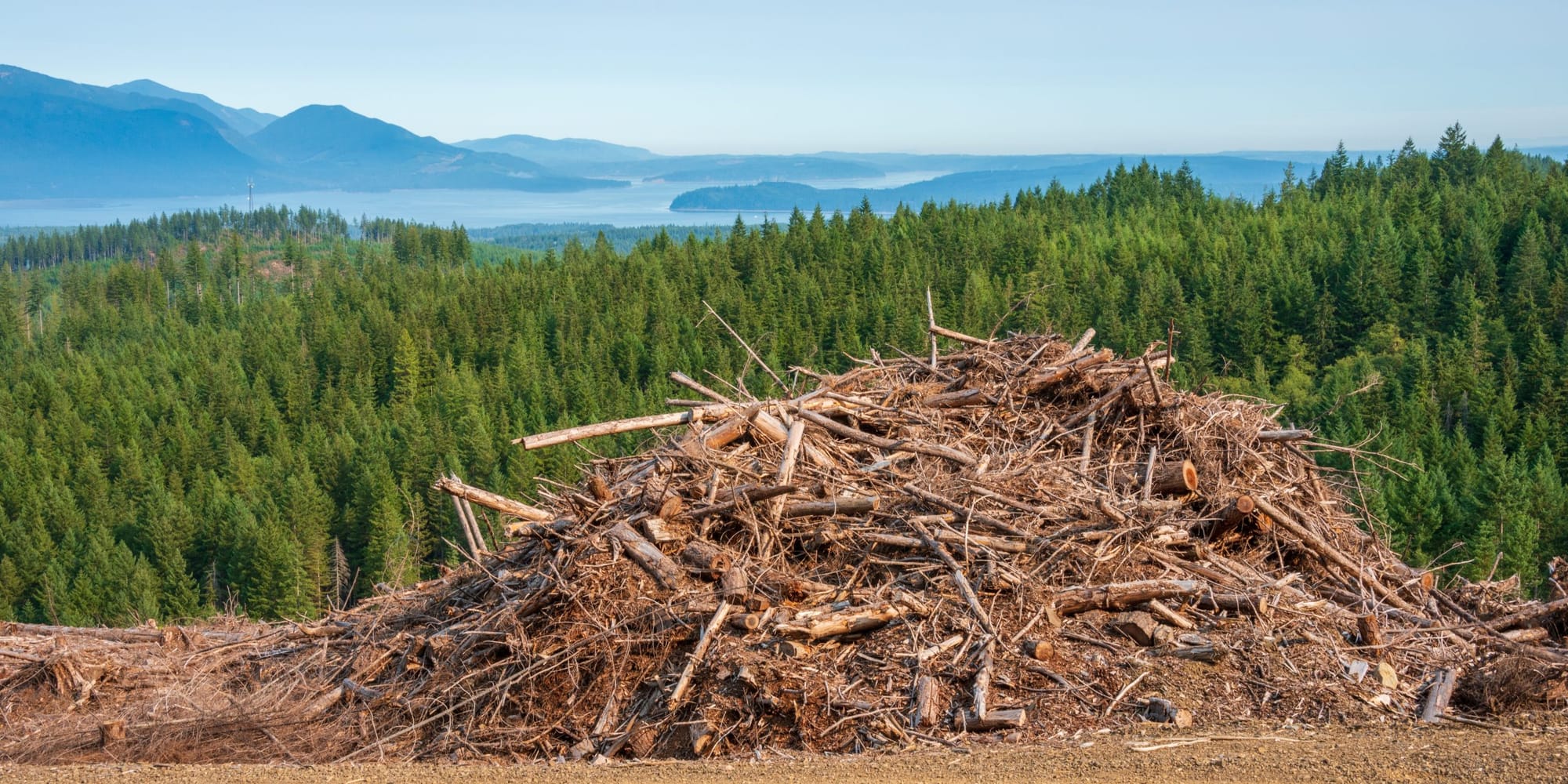
Let low-value slash pay its way out of the woods.
Biofuel producers need evidence for every ton of slash and invasive species they buy. A FEED designation gives each of your removals that evidence, including what the material would have done without biofuel and whether selling it causes leakage. That lets material you once paid to burn or haul help pay for fuel reduction and cleanup.
Eligibility decides whether your fuel earns credits, and carbon intensity decides how much each gallon earns. Both rest on feedstock evidence: origin, chain of custody and attestations. Today you rebuild that evidence for every supplier and every deal. FEED-designated feedstock arrives with the evidence assembled, analyzed and kept current, so you know the eligibility and carbon intensity of the feedstock before you buy it.
- The U.S. 45Z credit shrinks as a fuel’s carbon intensity rises, and fuel at or above 50 kg CO2e per million Btu earns nothing. A producer can only claim a low carbon intensity if the feedstock evidence supports it.
- California’s LCFS pays each fuel for the gap between its carbon intensity score and the program’s annual benchmark. The analysis behind the score sets the size of that gap.
- Renewable diesel made from distillers corn oil, an ethanol plant by-product, won a California score of 27.42 in 2020 on the strength of evidence that the oil was a by-product. S&P Global valued that score at about $1.64 per gallon in California.
Sources: 26 U.S.C. §45Z (Cornell LII) · CARB, About the LCFS · S&P Global, ethanol plants and renewable diesel feedstock (2020)
What would a feedstock have done if nobody bought it for biofuel? Did the sale take it from another user, and what did that user switch to? Is demand pushing suppliers to make more waste or clear land to grow more? The answers could decide whether biofuel keeps the carbon claims that make it worth more than fossil fuel. FEED answers these questions alongside the evidence you need for eligibility today, and calculates each stream’s CI from origin to pickup in each program’s model, ready for your verifierAn independent auditor, hired by the developer or producer, that checks the evidence behind a credit or claim. to recompute.
- When the U.S. EPA approved fuel made from grain sorghum oil in 2018, its analysis counted the leakage from taking that oil away from livestock feed, which forces feed buyers to replace it with more corn or vegetable oil. Counting that leakage doubled the pathway’s total emissions.
- The EU’s renewable energy rules now require a counterfactualWhat would have happened to a feedstock if no one had bought it, such as landfilling, burning, or rotting in place. check for wood: EU countries may not subsidize energy made from wood that could have become lumber, veneer or other higher-value products.
- A 2021 study by the International Council on Clean Transportation found that leakage from taking a waste away from its existing user can add significant emissions. For sawmill residues, the leakage emissions were higher than the emissions of fossil diesel.
Sources: ICCT, EPA and grain sorghum oil · Guidehouse, EU Renewable Energy Directive III · ICCT, indirect emissions from waste feedstocks (2021)
Every new supplier means a new round of diligence: data requests, site visits, sampling and analysis. Without FEED, you pay the full cost of that diligence for every supplier you add, even when the feedstock turns out not to qualify. A FEED designation builds the evidence once, keeps it current, and spreads the cost across every buyer of the stream. Adding a FEED-designated supplier adds feedstock without adding diligence. Buying in volume from one supplier? Sponsor that supplier’s FEED designation, and buy the feedstock without the premium for as long as you sponsor the designation and monitoring.
- In 2022, Darling Ingredients bought Valley Proteins, with 18 rendering and used cooking oil plants, and agreed to buy FASA, Brazil’s largest renderer. The stated goal was to diversify feedstock for Diamond Green Diesel, its joint venture with Valero, across multiple continents.
- Neste has bought a string of waste and residue suppliers, including Mahoney Environmental in the U.S. and Walco Foods in Ireland, to build a global feedstock platform rather than depend on a few outside sources.
- Under ISCC certification, auditors must verify a sample of the points of origin feeding each collection point, and new participants in high-risk supply chains face mandatory surveillance audits. Every new supplier added means another round of audits.
Sources: S&P Global, Darling diversifies Diamond Green Diesel feedstock supply (2022) · Renewable Energy Magazine, Neste acquires Mahoney Environmental (2020) · Biobased Diesel Daily, Neste closes acquisition of Walco Foods (2022) · ISCC, waste and residue supply chains (2020)
Buy FEED-designated feedstock directly from the supplier, or through the FEEDstock Desk. Through the Desk, Ecostrat sources feedstock matched to your plant’s specs, such as moisture, free fatty acids, metals, ash, particle size and contaminant limits. Ecostrat buys as a principal from many suppliers and sells to you under one contract, so losing one supplier doesn’t stop your plant. Ecostrat also arranges delivery to your site, leaving your team free to focus on producing fuel.
- Over more than 25 years, Ecostrat has delivered over 5 million metric tons of feedstock to bioenergy, renewable fuel, biogas, and biomaterial markets.
Sources: Advanced BioFuels USA, Ecostrat awarded Company of the Year by Canadian Biomass Magazine (2024)
If most of your feedstock comes from one supplier, sponsor that supplier’s FEED designation. You pay the designation fee and the annual monitoring fees, and nothing more. For as long as you sponsor the designation, you buy that supplier’s FEED-designated feedstock at the market price for undesignated feedstock. You get the evidence behind your credits and a secure tie to the supplier your plant depends on, without paying a premium on every load.
- In 2020, Neste bought Mahoney Environmental, a U.S. used cooking oil collector, to lock in waste feedstock for its renewable fuels. Securing a main supplier is worth paying for, and the largest producers have paid by buying the supplier outright.
- Diamond Green Diesel is a 50/50 joint venture between refiner Valero and Darling Ingredients, which supplies the venture’s low-carbon feedstock. In 2022, Darling bought Valley Proteins’ 18 rendering and used cooking oil plants to add feedstock for the venture. Producers tied closely to a main supplier secure both the volume and the evidence behind it, but few producers can afford to buy a supplier to get there.
Sources: Renewable Energy Magazine, Neste acquires Mahoney Environmental (2020) · S&P Global, Darling diversifies Diamond Green Diesel feedstock supply (2022)
| Cost & liability | How it’s covered | Handled by |
|---|---|---|
| Origination | Designated feedstock sourced, aggregated, and contracted for you. | FEEDstock Desk |
| Evidence & analysis | Evidence gathered and analyzed for each feedstock stream before you buy. | FEED designated |
| Program eligibility | Each feedstock stream checked against the programs you sell into, from 45Z origin rules and LCFS feedstock definitions to Canada’s land use criteria and biomass sustainability rules. | FEED designated |
| Feedstock carbon intensity | Calculated for each feedstock stream from origin to pickup in each program’s model, with the model version recorded. When you buy through the FEEDstock Desk, transport is included too. | FEED & FEEDstock Desk |
| Attestations | Chain of custody and supplier attestations assembled for every delivery. | FEED designated |
| Logistics | Hauling, scheduling, and delivery to your site. | FEEDstock Desk |
| Operations | Every delivery matched to your process specifications. | FEEDstock Desk |
| Supply security | Backup supply at the same specification, so one failed delivery won’t stall your plant. | FEEDstock Desk |
| Verification | Evidence delivered to your verifier, ready to recompute. | FEEDstock Desk |
| Bankability | An evidenced, diversified, and derisked supply chain your buyers and investors can trust. | FEED & FEEDstock Desk |
How it works
- Share your specs
Fill out our intake form to tell the FEEDstock Desk what your plant needs.
Find your FEEDstock - The Desk sources it
The Desk matches FEED-designated streams to your specs, buys the feedstock, and arranges transport.
- Delivered with evidence
Feedstock arrives at your plant, and the FEED evidence package goes to your verifier.
Your biofuel pathway, region, feedstock specs, volumes, delivery schedule, and the fuel programs you sell into.
It depends on the feedstock you need, the volume, and whether FEED-designated streams already exist near your site. The Desk will give you an estimate once it reviews your intake form.
One delivered price per ton covers the feedstock, its FEED evidence, and transport. Sponsors buy their sponsored supplier’s feedstock without the premium.
The Desk replaces it with FEED-designated feedstock at the same spec, so one failure won’t stall your plant.
Ecostrat has been in the biomass business for over 25 years. We’ve built one of the largest biomass supply networks in North America and use it to rate biomass supply sheds. Our Carbon Markets division builds on that foundation for the future of the biomass economy.
Help us build biofuel supply chains.
Come talk to us about the feedstock supply chains that biofuel needs.
We’ll reach out with details as the division and the standard develop.